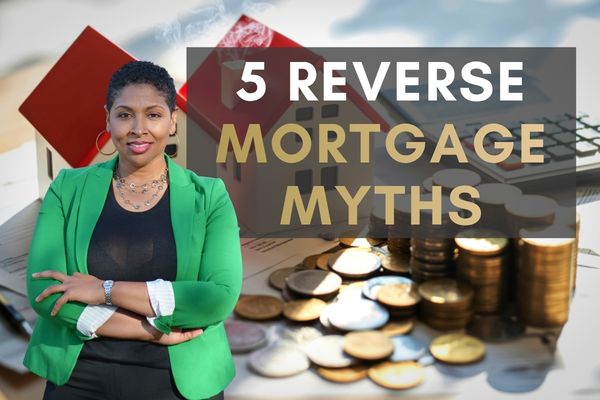
Five Myths About Reverse Mortgages That Bay Area Homeowners Still Believe
Are you avoiding the reverse mortgage conversation because you are not sure what is actually true? You are not alone. Reverse mortgages are one of the most misunderstood financial tools in real estate, and the Bay Area homeowner who could benefit most is often the one most likely to dismiss the idea before getting the facts.
Let's clear up the five biggest myths I hear from East Bay homeowners over 62 who have significant equity and are trying to figure out their next chapter.
I'm Katrina Carter, a licensed real estate broker and loan officer serving the East Bay. I work specifically with homeowners navigating complex decisions around equity, estate planning, and what comes next. Here is the truth about reverse mortgages.
Myth 1: The Bank Takes Your Home
This is the most persistent myth and the one that causes the most unnecessary fear. A reverse mortgage does not transfer ownership of your home to the bank. You remain on title. You own the home.
What a reverse mortgage does is allow you to access a portion of your home equity as a loan — one that does not require monthly repayment as long as you continue to live in the home as your primary residence, maintain it, and keep up with property taxes and homeowners insurance.
The loan becomes due when you sell, move out permanently, or pass away. At that point, the home is sold (or the heirs can pay off the loan to keep the home), and any equity remaining after the loan is repaid goes to you or your estate.
Myth 2: Your Heirs Will Be Stuck With the Debt
Reverse mortgages are non-recourse loans. This is an important phrase. It means that even if the loan balance eventually exceeds the value of the home — which is more likely in a declining market than in the Bay Area — your heirs are not personally liable for the difference. The most they can lose is the home itself.
If the home is worth more than the loan balance when the borrower passes away, the heirs simply pay off the loan and keep the remaining equity. Many families find this is still a meaningful inheritance even after a reverse mortgage has been in place for years.
Myth 3: You Have to Own Your Home Free and Clear
Not true. You can have an existing mortgage and still qualify for a reverse mortgage. In fact, one of the most common uses of a reverse mortgage is to pay off an existing conventional mortgage, which eliminates the monthly mortgage payment and frees up cash flow for retirement.
For Bay Area homeowners who still have a remaining balance on their primary mortgage, a reverse mortgage can convert that payment obligation into a more flexible arrangement — one that dramatically improves monthly cash flow without requiring a sale.
Myth 4: Reverse Mortgages Are a Last Resort for People Who Ran Out of Money
This perception is outdated and honestly does not reflect how financial planners and estate attorneys are now thinking about this tool. Reverse mortgages have become part of sophisticated retirement income strategies, especially for homeowners with significant home equity relative to other retirement assets.
Using home equity strategically through a reverse mortgage can allow you to delay drawing on retirement accounts, let investments continue to grow, and maintain more flexibility in how you fund your lifestyle. For some Bay Area homeowners, the equity in their home is their largest asset by far. Ignoring it as part of a retirement income plan does not make financial sense.
Myth 5: You Cannot Sell or Move After Getting a Reverse Mortgage
You can absolutely sell your home after getting a reverse mortgage. If you decide you want to downsize, relocate, or move to a different area, you sell the home, the reverse mortgage gets repaid from the proceeds, and you keep the rest.
There is also a product called a HECM for Purchase that allows you to use a reverse mortgage to buy a new home — which means some homeowners use this tool to right-size without the burden of a new monthly mortgage payment on their next property.
A Client Story
I worked with a homeowner in her early 70s in the East Bay who had paid off her home and was living on Social Security and a modest pension. She was asset rich and cash-flow constrained. A reverse mortgage allowed her to access a monthly draw from her equity that covered most of her living expenses without selling the home she had lived in for decades. She told me it felt like the house was finally paying her back.
FAQ: Reverse Mortgages for Bay Area Homeowners
Who qualifies for a reverse mortgage?
You must be 62 or older, own the home as your primary residence, have sufficient equity, and meet basic credit and property requirements. The home must be maintained and property taxes must be kept current.
How much can I borrow with a reverse mortgage?
The amount depends on your age, the home value, and current interest rates. Older borrowers generally qualify for a higher percentage of their home equity. A licensed reverse mortgage specialist can run a personalized estimate for your situation.
Does a reverse mortgage affect Social Security or Medicare?
Generally no. Reverse mortgage proceeds are loan advances, not income, so they typically do not affect Social Security or Medicare eligibility. They can affect Medicaid eligibility, so it is worth discussing with a financial advisor if that applies to you.
Is a reverse mortgage right for everyone over 62?
No. It is a tool, not a universal solution. It works best for homeowners who plan to stay in the home long-term, who need to improve cash flow, and who have weighed it against other options like downsizing or a HELOC. The conversation with a qualified advisor is how you figure out whether it belongs in your plan.
Want to Explore Whether a Reverse Mortgage Makes Sense for You?
I can walk you through the numbers in plain language — no pressure, no sales pitch, just the facts for your specific situation. I work with homeowners across the East Bay who are at this crossroads.
Katrina Carter
Broker Associate | Loan Officer
Call or text: 510.288.6002