
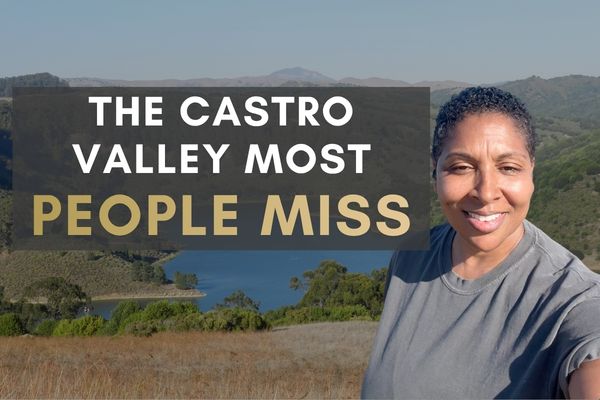
Hidden Gems in Castro Valley That Most People Drive Past
If you only know Castro Valley from driving through it on your way somewhere else, you are missing most of what actually makes this town worth a second look.
Quick answer. Castro Valley's best spots are not on the main boulevard where everyone is looking. They are tucked into the canyon roads, along the lake, and in the small pockets locals rarely mention to outsiders because they would rather keep them quiet.
I'm Katrina Carter, an East Bay broker and loan officer who spends a lot of time driving through Castro Valley with clients, and every time I do I find myself pointing out something new. Here is what I want more people to know about this town.
1. Lake Chabot Regional Park
Most people know Lake Chabot exists, but far fewer actually use it the way locals do. Beyond the main trail loop, there are quieter paths along the water that stay peaceful even on busy weekends, and the boat rentals give you an entirely different view of the East Bay hills that most visitors never see. Residents who live within walking distance treat it almost like a private backyard, showing up on weekday mornings when the crowds from farther away have not arrived yet.
2. The Canyon Roads
Drive up into the hills off the main boulevard and the entire feel of Castro Valley changes. Winding roads, larger lots, and a genuine sense of privacy that surprises people who assumed this whole area was flat suburban streets. This is where a lot of longtime residents live specifically because they found this pocket and never wanted to leave.
3. Rowell Ranch
This is one of those places that longtime East Bay families know well and newer residents often have never heard of. It hosts community events throughout the year and gives the area a genuine ranch and rodeo heritage feel that you do not find in most East Bay suburbs anymore.
4. Five Canyons
Tucked into the hills, this neighborhood has its own trail network and a quieter, more residential feel than the flatter parts of town. It is a favorite for families who want walkability without giving up privacy.
5. The Farmers Market
Castro Valley's farmers market draws a genuinely local crowd, not a tourist crowd, which means you get real conversations with the growers and vendors rather than just a transaction. It is a good barometer for how connected this community actually is.
6. The Library and Community Center
It sounds small, but Castro Valley's library and community center anchor a surprising amount of local life, from classes to events to simple weekday afternoons. It is the kind of civic hub that a lot of newer developments never manage to build.
7. The Housing Stock Tells the Same Story as the Town
What surprises a lot of buyers when they start looking at homes here is how much variety exists inside one city. You can find a flat, walkable street that feels almost identical to San Leandro, and ten minutes later be looking at a hillside lot with real acreage and total privacy. That range is part of why Castro Valley is so hard to sum up in one sentence, and part of why it rewards buyers who take the time to actually drive every part of it instead of judging the whole city off a single pass through on the boulevard. It also means the right fit here really does depend on what kind of daily life you are trying to build, not just the price per square foot.
One thing I've noticed driving through this market is that Castro Valley gets undervalued in conversations about the East Bay, mostly because it does not have one single dramatic feature the way a downtown or a reservoir does. What it has instead is a collection of smaller, quieter things that add up to a genuinely good place to live, and that is exactly the kind of thing you only discover by spending real time there. Every hidden gem on this list shares one trait. None of them are visible from the freeway, and none of them show up if you only pass through on your way to somewhere else. This is a town that reveals itself over a season of actually living there, not a five minute drive down the boulevard.
FAQ
Is Castro Valley considered part of the Tri Valley or the East Bay flatlands?
Neither exactly. Castro Valley sits in its own pocket between Hayward and San Leandro, with a mix of flat neighborhoods and hillside canyon areas, which is part of what makes it hard to categorize and easy to overlook.
Is Lake Chabot open to the public year round?
Yes, the regional park is open to the public with seasonal hours, and the boat rental facility typically operates during the warmer months.
Are the canyon road neighborhoods hard to access?
Not at all. They connect directly to the main boulevard and are only a few minutes from the flatter parts of town, they just feel far more secluded once you are up there.
What makes Castro Valley different from neighboring San Leandro?
Castro Valley tends to offer larger lots and more hillside terrain options, while San Leandro offers more flat, walkable neighborhoods closer to the bay. Both are part of the same unincorporated Alameda County fabric but feel distinct once you spend time in each.
Katrina Carter
Broker Associate | Loan Officer
Call or text: 510.288.6002